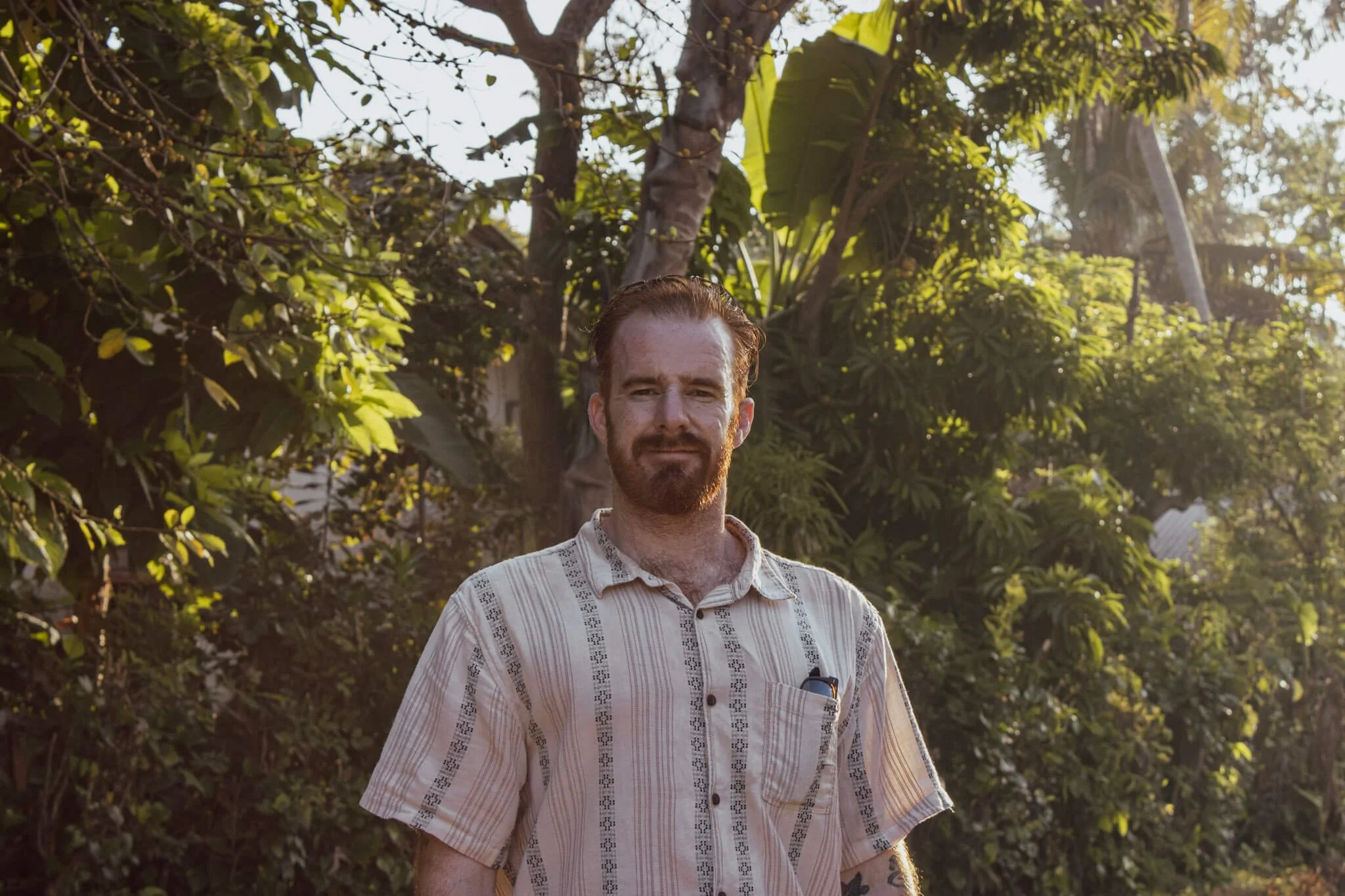
sobriety is not a destination.
sobriety is a doorway.
POSITIVE PSYCHOLOGY AND ALCOHOL PERFORMANCE COACHING
positive psychology and alcohol performance coaching for individuals who are ready to change their relationship with alcohol and substances, to find their new identity in an alcohol-free life.
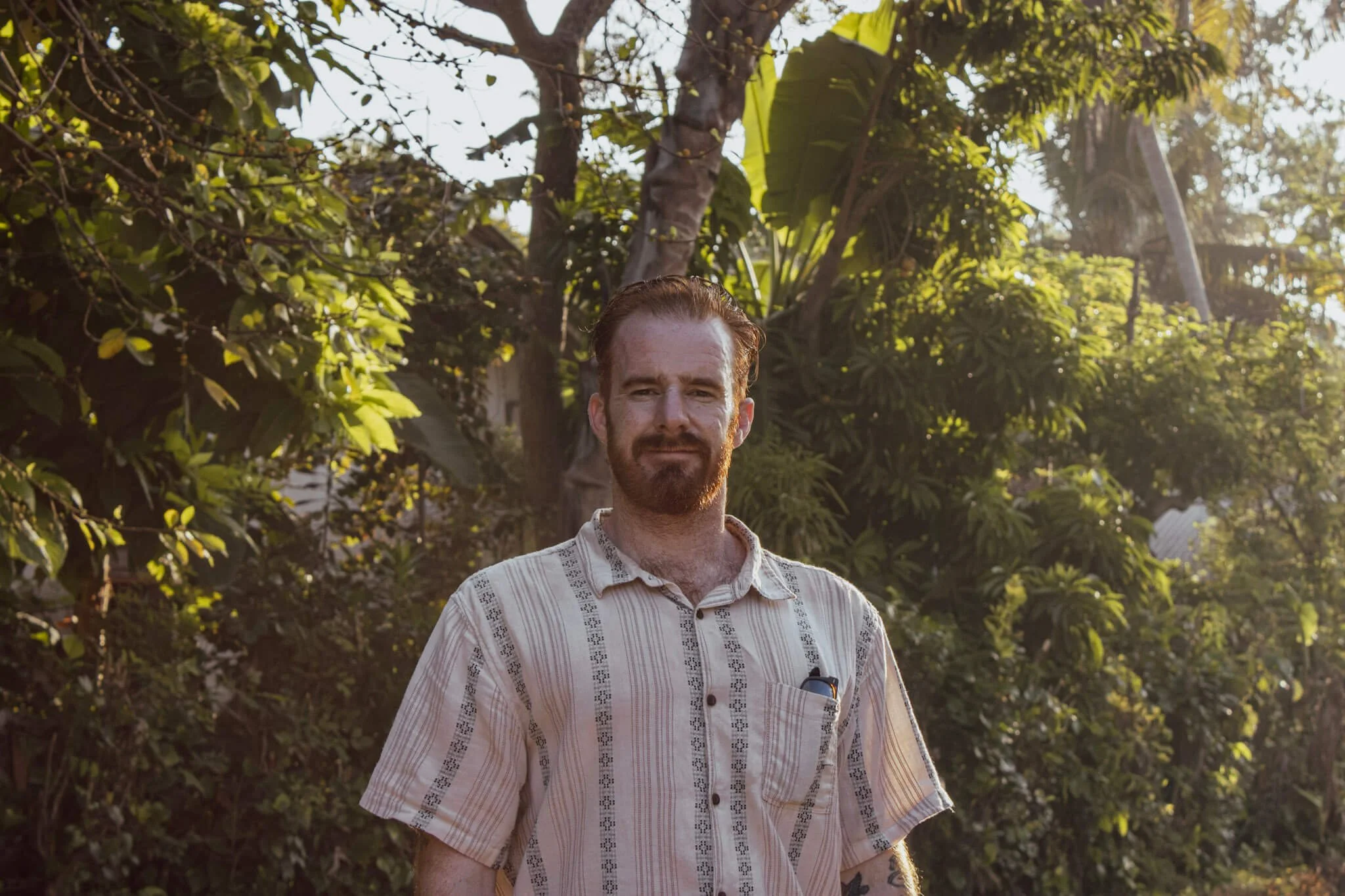
CAM SPRINGETT IS A FORMER ADDICT, WHO IS HELPING OTHERS TO NAVIGATE SOBRIETY.
IF YOU’RE FEELING LOST, TOGETHER WE CAN FIND THE WAY FORWARD.
let’s work together to make sense of your alcohol-free life.

THE DOORWAY
I am not broken. I never was. What years of addiction cost me was not capability. If anything I had too much of that, pointed in the wrong direction. What it cost me was trust, in my own body, my own mind, my own judgement.
Once I understood that, I was able to begin creating the life I actually wanted to live. The work is not easy and I still show up every day, not because I have it figured out, but because that is what life means to me now. Becoming someone I can depend on. When I trust myself, things go right.
If that lands somewhere, you are probably in the right place. This is for people who have made the decision to stop drinking, or who are standing in the space that decision created, trying to figure out what it means and where to go next. You do not have to have it figured out. You just need to have made the decision.
No cost · Ten minutes · No obligation

THE COACH
I am not a coach who studied people like you.
I am someone like you.
I am nearly three years sober and still doing the work. What got me here is the kind of darkness that most people only read about. Addiction, violence, suicide attempts, rock bottoms, plural.
Not from a position of having it all figured out, but from a place of real, ongoing commitment to understanding myself.
I am training in positive psychology under Andy Ramage through AreteWay Coaching and I am a trained alcohol performance coach. So you get someone who understands the terrain from the inside and has the framework to help you navigate it.

TWO WAYS TO WORK TOGETHER
The same foundation. Two distinct starting points.
READY TO STOP
alcohol performance coaching
For people who have decided that alcohol is costing them more than it gives them, and who want someone who understands from the inside what removing it costs and what it makes possible.
ALREADY SOBER
positive psychology coaching
For people who are sober and trying to figure out who they are now. Identity, values, strengths, and what comes next. The energy it took to survive is real, and this is where you learn to aim it.
15 questions · No cost clarity report · Completely confidential · No obligation
positive psychology and alcohol performance coaching
how do I know this is for me?
alcohol performance coaching
-
You know the feeling. Sunday morning, the week ahead already feeling heavier than it should. You performed well enough last week. You will perform well enough next week. The gap between well enough and what you know you are actually capable of has been there for a while now, and alcohol sits right in the middle of it.
Most people in this position carry that recognition privately for a long time before they do anything about it. There is no obvious moment to act when there is no obvious crisis. The cost is real, it accumulates quietly, and the ambivalence that keeps you cycling back is not a character flaw. It is a normal human response to something that has served a genuine psychological function, even as it has stopped making sense.
Alcohol performance coaching is built for the moment when the recognition becomes a decision. Not a wish. A genuine, committed decision to move toward alcohol-free as a permanent upgrade in performance, clarity, and quality of life.
The methodology draws on two clinically grounded frameworks from the AreteWay coaching programme, developed by Andy Ramage, and applies them with the specificity that only lived experience makes possible. The coach has been in this position. Nearly three years alcohol-free, with a background that includes addiction and rock bottoms that were not abstract. He is not at the top of a mountain. He is further along the same path, and honest about what that means. That is the psychological currency that makes this work.
The person on the other side of this work is not a better-behaved version of the person who started it. They are someone who has closed the gap, who performs at the ceiling they could always see, and who knows exactly who they are without the noise. That is what stepping through the doorway makes possible.
-
This coaching is the right fit if you recognise yourself in any of the following.
You know alcohol is costing you more than it gives, in sleep, performance, clarity, relationships, or the quiet accumulation of mornings that feel less than they should.
You see this as a performance or quality-of-life decision. You are right to see it that way. This coaching does not require you to frame it any differently.
You have tried willpower. Dry January has worked for a month. Cutting back has worked for a week. You have the evidence that a different kind of structure is what this requires.
You optimise other areas of your life. You cannot fully explain why this one has stayed stuck, and you are ready to find out.
You are genuinely ready to move toward alcohol-free as the direction of travel. Not as a condition imposed on you. As something you have already decided.
-
Before the first session begins, you complete the AUDIT: a WHO-validated ten-question assessment that confirms this is the right level of support for where you are. Green and Amber scores proceed to coaching. A score indicating physical dependence means a referral to clinical support first, with the doorway remaining open when that care is in place. The assessment is delivered in the context of care, not as a gate. It protects the quality of what follows.
-
The work runs across two interconnected frameworks from the AreteWay methodology.
The Ambivalence See-Saw
Most people who have tried and not managed to stop drinking are not short on willpower. They have genuine, competing reasons on both sides of the decision: the perceived benefits of drinking on one side, and the real costs of continuing alongside the benefits of removing alcohol on the other. The See-Saw maps both sides explicitly, using motivational interviewing and habit loop analysis. Working through it does not require pretending the benefits are not real. It requires looking honestly at whether the balance still makes sense. For most people in this position, it does not. Knowing that privately and being able to see it clearly are different things, and seeing it clearly is where committed action starts.
The performance framework
Alongside the See-Saw work, the coaching addresses what removing alcohol actually makes possible, in specific biological and psychological terms. What happens to sleep architecture in the first two weeks. What cortisol levels do over the following month. What cognitive clarity looks like at ninety days. The performance case for alcohol-free living is grounded in science, not inspiration, and it is delivered as such.
The pre-coaching commitment
Before the first session, you sign a pre-coaching commitment. It covers your commitment to the tools, the process, and the direction of travel toward alcohol-free. It is a moment of decision made explicit and written down, because that is what it needs to feel like. A lapse during coaching is explored through the See-Saw lens, as data rather than failure. A sustained return to previous patterns requires different support, and that is handled honestly if it arises.
-
Every coaching programme ends with the Next Chapter Statement. This is a written document built from your insights, shifts, and breakthroughs across the full course of your sessions. It is a landmark: a record of where you were when you started, what changed in the work, and where you are heading. Specific enough to navigate from. Yours to keep and build from.
No other alcohol performance coach in the UK offers this. It is the tangible proof of the work.
The specific benefits
Performance gains that willpower alone cannot produce, because the structure finally matches the decision.
A clear clinical picture of your relationship with alcohol, delivered with care rather than judgement.
A framework for moving through ambivalence rather than cycling in it, built on science and lived experience in equal measure.
The specific biology of what alcohol removal does to your body and brain, on a timeline that is yours to track.
A coach who has closed this same gap and is honest about what the path actually looks like from the inside.
A written landmark at the end of the work that captures who you were when you started and who you are now.
Continuity into the next phase: the identity work that follows alcohol-free living is already available through the same practice, with the same coach.
positive psychology coaching
-
You stopped drinking. The people who matter are relieved. On paper, things are going well. On the inside, there is a gap where the noise used to be, and the question filling it is louder than you expected: who am I now, actually, without the thing I used to manage everything with?
Most people who reach this point carry the confusion alone, because the people around them think stopping was the hard part. They do not understand that stopping was the doorway, and you are standing in what is on the otherside of it, figuring out what to build. That is not a failure of sobriety. It is the work that sobriety makes possible.
The identity gap is real and it is well-documented. Research on alcohol-free identity development consistently shows that a clear, positive sense of who you are without alcohol is one of the central factors in sustained, contented alcohol-free living. That identity is built through deliberate work, not through waiting for it to arrive.
Positive psychology coaching is that work. It uses values clarification, strengths-based frameworks, and identity building to move you from managing the space that alcohol left to actively constructing what fills it. The methodology is grounded in positive psychology research and delivered by someone who has been in the same gap, not someone who studied it from the outside.
The person on the other side of this work knows who they are. They have a clear picture of what they stand for, what they are building toward, and what a fresh hold on life actually looks like for them specifically. That is contentment with direction. That is what this coaching builds toward.
-
This coaching is the right fit if any of the following is true for you.
You are alcohol-free. Weeks, months, or years. The decision to stop is solid and not in question.
Sobriety has not delivered what you thought it would. Something still feels unresolved. You are functioning, sometimes well, and you can see a version of yourself that is living rather than just managing. You have not got there yet.
You feel like you should be further along by now and cannot fully explain why you are not.
You are tired of explaining yourself to people who were relieved you stopped but do not understand that the drinking was not the answer to a question that is still there.
You are self-aware, motivated, and capable of the work. What you are missing is direction and the right tools.
You are ready to build forward. Identity, values, strengths, next chapter. That is what this is.
-
This coaching is forward-facing. It is built for people who are past the acute early phase and ready to build. If you are still in the early weeks of stopping, or if clinical or medical support is the primary need right now, that is the right starting point and this practice will be here when you have come through it. The chemistry call is where that timing is assessed, with care.
This coaching is also distinct from therapy and counselling. Therapy processes the past. Coaching builds the future. Both are valuable. The question is which one matches where you are right now.
-
The work runs across four interconnected areas, each building on the last.
Values clarification
Most people who stopped drinking spent years using alcohol to navigate situations that felt difficult: social pressure, stress, boredom, celebration, grief. When alcohol is removed, the situations remain and the navigation tool is gone. Values clarification work identifies what actually matters to you now, the version of you that is here, not the version that needed the noise. That is the foundation everything else is built on.
Strengths work
The effort it took to get to where you are is evidence, not biography. The persistence, the self-awareness, the willingness to be honest about what was not working: those are precisely the qualities that build the next chapter. Positive psychology coaching uses that evidence deliberately. The same psychological currency that got you through is the same currency that builds forward. It needs redirecting, not replacing.
Identity building
The identity gap is a construction site. The work is not about returning to a previous version of yourself. That person used alcohol as a coping tool and is not who you are now. The work is about building a clear, specific sense of who you are without it: what you stand for, what you are building toward, what your life looks like in concrete terms when you stop managing backwards and start building forward.
The Next Chapter Statement
Every coaching programme ends with the Next Chapter Statement: a written document built from your insights, shifts, and breakthroughs across the full course of your sessions. It is a landmark, a record of who you were when you started, what changed in the work, and where you are heading. Specific enough to navigate from. Yours to keep and build from. It is the tangible proof of the work.
-
At the end of the programme, you have something most people who are alcohol-free do not have: a clear, articulated sense of who you are now and what you are building toward. A specific picture grounded in your actual values and strengths, with a written document that captures it and a direction to move in.
The specific benefits
A clear framework for building forward rather than managing backwards.
Values clarification work that tells you what you are actually for, not just what you have moved away from.
Strengths-based coaching that treats the effort it took to get here as the raw material for what comes next.
A coach who has been in the identity gap himself and is honest about what it actually looks like, not someone who studied it from the outside.
A coaching process that does not require you to see yourself as someone in recovery, because that framing is not a requirement here.
The Next Chapter Statement: a written landmark, specific enough to navigate from, yours to keep.
An endpoint that is a beginning. A direction. A fresh hold on life.
15 questions · No cost clarity report · Completely confidential · No obligation

THE FOUNDING COHORT
Six spots.
No cost.
While founding spots remain, every new client works through the first six sessions at no charge, in exchange for an honest testimonial at the end.
This is not a promotional price. Not a taster. The founding offer exists because the diploma requires supervised coaching hours and I would rather give you real, full-quality sessions than charge as if accreditation were already complete. The quality is full standard throughout. The only difference is the price.
Founding closes when the six spots are filled.
the doorway is already open.
The questionnaire takes ten minutes. A free personalised clarity report lands in your inbox regardless of what comes next. If there is a good fit, founding sessions are available at no cost while spots remain.
15 questions · No cost clarity report · Completely confidential · No obligation
Not ready yet? Read my story first →